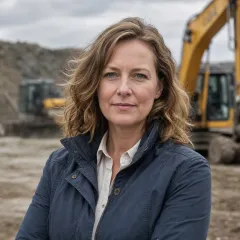
When I Showed Up At The Sandvik Dealer With A Spec Sheet (And Got Schooled)
The Day I Walked In Thinking I Knew Everything
In early 2023, I found myself standing in a Sandvik dealer's parking lot, clutching a printed spec sheet like it was a golden ticket. I was confident. I'd done my homework. I knew exactly what I wanted: a new vibrating screen and a replacement LHD for the mine. I'd spent two weeks cross-referencing models, comparing capacities, and calculating ROIs.
I walked in. Shook hands. Sat down. And within fifteen minutes, realized I'd missed the entire point.
I'm an office administrator for a medium-sized aggregate company. I manage all the purchasing for our site operations—about $400,000 a year across maybe a dozen vendors. I report to both operations and finance. That means I'm caught between the guys in the field who want new toys and the folks in accounting who want receipts. It's a balancing act I'd been pretty proud of.
But that day, sitting across from a guy named Dave who'd been in the industry for 25 years, I felt like a rookie.
What My Spreadsheet Was Missing
Here's what I'd done: I listed the equipment we needed—a Sandvik vibrating screen for our secondary crushing circuit and a Sandvik LHD for underground mucking. I'd spec'd out the capacity requirements, the deck sizes, the bucket volume. I even had pricing from three different sources.
Dave listened patiently. Nodded. Then asked a question I wasn't prepared for: "What does your maintenance team look like?"
I hesitated. I'm not a maintenance manager, so I couldn't speak to their exact experience level. What I could tell him, from a procurement perspective, was the average technician experience across our three shifts.
"Most of them have 5-7 years," I said. "But we've had turnover. One of the shifts is pretty green."
Dave nodded again. Then he pulled out a different type of spec sheet—one about service contracts, training programs, and parts availability. He wasn't selling me equipment. He was selling me uptime.
That's when it clicked. Most buyers focus on horsepower, dimensions, and price—and completely miss the support infrastructure that keeps the equipment running. The question everyone asks is, "What's your best price?" The question they should ask is, "What happens when something breaks?"
The Vendor Who Almost Cost Me $40,000
My gut said Dave was right. The numbers said go with the cheapest. Every spreadsheet analysis I'd done pointed to a different vendor—one that was 15% cheaper with similar-looking specs. Something felt off about their responsiveness, though. They took three days to return my first email.
I went with my gut. I chose Dave's package.
Turns out, that gut feeling saved us. A month later, I heard through the grapevine that the cheaper vendor had chronic parts shortages. Their customers were waiting 4-6 weeks for critical components. We would have been down for a month—costing us an estimated $40,000 in lost production.
Dave's team? They had a local parts hub. Most standard parts arrived next day. Emergency replacements? Within 24 hours on a premium, but we only used that once.
I should add: the first screen we got from them had a minor hydraulic issue in week two. I was panicking. Dave's service team had it fixed within a day under warranty. No invoice. No finger-pointing. Just fixed.
That single experience changed how I evaluate vendors. Now I don't just compare equipment specs. I compare support systems.
What I Learned About LHD Sizing
The Sandvik LHD purchase taught me a different lesson. The numbers said a 6-yard model would handle our production targets. My gut said... something else. The actual operators wanted a smaller unit for maneuverability in our narrower drifts. The older guys wanted what they'd always used. The finance team wanted the cheapest option per ton.
Every spreadsheet analysis pointed to the 6-yard model. Something felt off. Turns out, what my gut detected was an operational reality the specs didn't capture: our drifts had tighter turns than the standard assumptions. The 6-yard LHD would have been constantly scraping walls, slowing cycle times, and increasing tire wear.
Dave recommended the Sandvik LH410, a 4-yard unit with better articulation. It cost less upfront, moved faster in our conditions, and—critically—the operators actually liked using it.
Is the premium option always worth it? Sometimes. Depends on context. But the lesson was clear: specs are necessary, but they're not sufficient. You need to understand the operating environment.
The Parts Procurement Workflow
On the parts side, I've become a convert to online ordering for routine consumables. The Sandvik parts online portal works well for our regular needs—filters, wear liners, hydraulic hoses. It cut our ordering time from about 8 hours a month to maybe 2. Our accounting team loves the itemized digital invoices; nothing gets rejected anymore.
For critical spares—major assemblies, proprietary components—I still prefer calling a local dealer. (Should mention: the online portal doesn't always show real-time stock for the really specialized stuff.)
Managing relationships with 6-7 vendors for different equipment families across two locations means I keep a running log of part numbers, lead times, and minimums. It's not glamorous, but it's saved us from getting shut down on a Monday morning more times than I can count.
The Real Bottom Line
Industry best practices in 2020 aren't what they are in 2025. Some fundamentals haven't changed—you still need reliable equipment and good support. But the execution has transformed. Remote monitoring now lets dealers predict failures before they happen. Online portals streamline procurement. Electric LHD options are becoming viable for underground operations.
What hasn't changed: the importance of a good relationship with a knowledgeable dealer. Dave saved me from making a $40,000 mistake—not because he had better specs, but because he asked the right questions about our operation.
These days, before I order anything from a new vendor, I verify three things: parts availability timeline, warranty claim procedure, and average service response time. I wish I'd been tracking that from the start. But we learn as we go.
The older guys in the industry have seen it all. The newer models are impressive. The fundamentals? Uptime matters more than speed. Support matters more than price. Simple.
That's what I learned standing in a parking lot in early 2023. Maybe it saves someone else the same headache.